Cradle Cap: Causes, Safe Care, and What to Avoid
Cradle Cap: Causes, Safe Care, and What to Avoid
By the Octaskin Team. Last updated September 2026. This article is educational and is not a substitute for medical advice; the guidance below is drawn from pediatric and dermatology sources cited throughout.
Important first: adult seborrheic dermatitis products, including ones with salicylic acid, essential oils, or medicated dandruff actives, are not safe to use on a baby's skin, and this article will explain exactly why. With that said: cradle cap is common, usually mild, and almost always clears on its own within the baby's first year, and safe home care for it is simple.

What Causes Cradle Cap
Cradle cap, medically called infantile seborrheic dermatitis, shares the same basic story as adult seborrheic dermatitis: Cleveland Clinic explains that oil glands on a baby's scalp "may produce too much oil, possibly due to hormones they receive from their mother," which causes skin cells to stay stuck to the scalp instead of shedding normally, and that "a certain yeast (Malassezia) that naturally lives on your baby's skin may also play a role." StatPearls adds the mechanism detail: the yeast "breaks down sebum, consuming the saturated fatty acids, and subsequently leaves the unsaturated fatty acids behind," the same fatty-acid irritation pattern seen in adults.
The difference is the trigger. In babies, residual hormones from the mother spike the baby's own oil production in the first weeks of life, which is why cradle cap shows up early and typically clears as those hormones clear the baby's system, usually within 6 to 12 months. Adult seborrheic dermatitis does not resolve this way on its own, which is the main reason the two conditions, while mechanistically similar, are managed very differently.
Safe Home Care, Step by Step
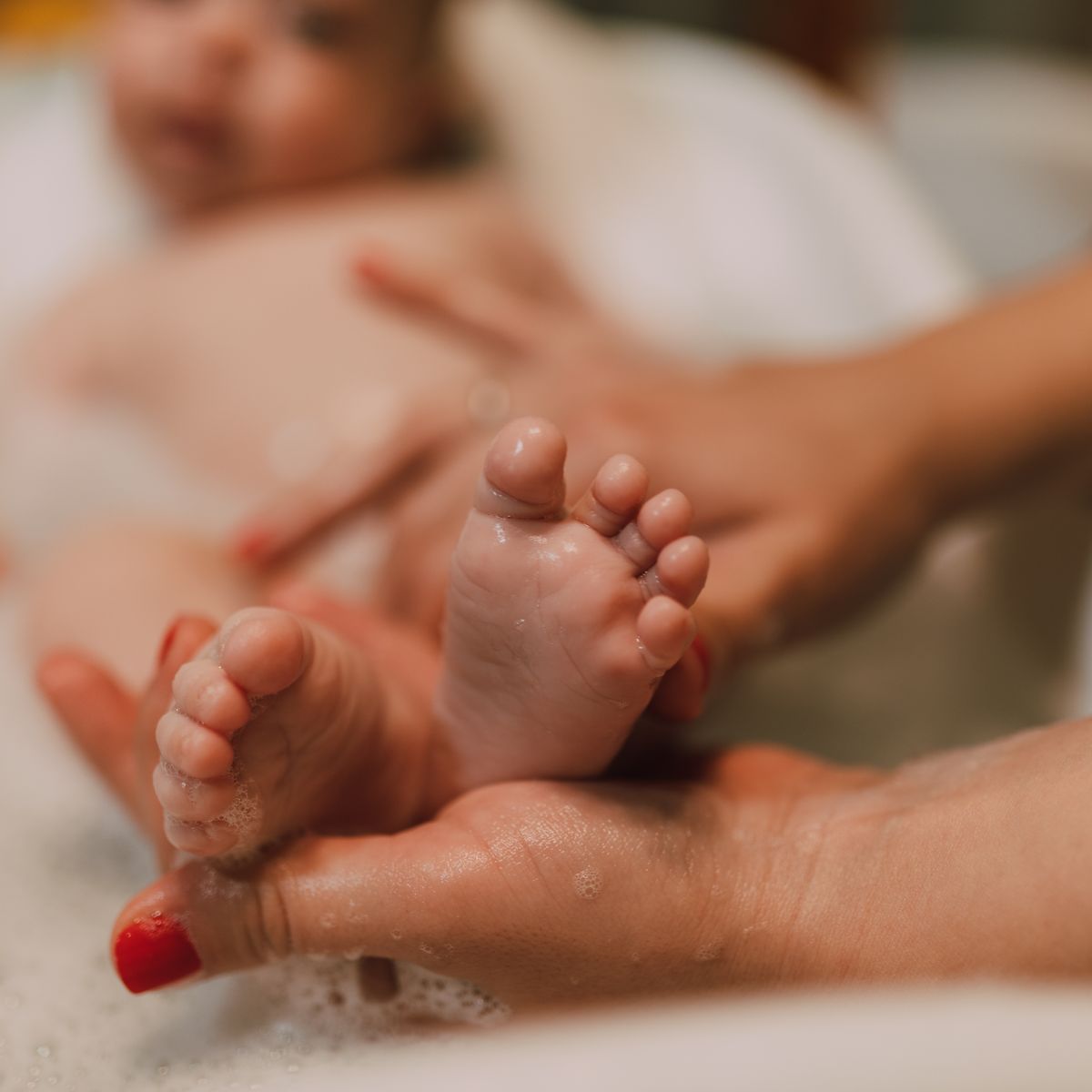
Across the American Academy of Dermatology, Nemours/KidsHealth, Cleveland Clinic, and the American Academy of Pediatrics, the recommended approach is consistent and simple: wash the scalp with a mild, tear-free baby shampoo every day or every other day. If scales are stubborn, apply a small amount of mineral oil, plain baby oil, or petroleum jelly to soften them, let it sit for a few minutes, then gently loosen the scales with a soft brush or soft-bristled toothbrush before shampooing it out. Cleveland Clinic specifically advises against olive oil, since it "may not be good for your baby's skin," and against peanut oil, due to allergy risk.
The one instruction every source repeats: do not scratch or pick at the scales. Broken skin from picking is exactly what allows a secondary infection to take hold, which is one of the signs covered below that means it is time to call the pediatrician.

What Not to Use
This is the section worth reading closely. A published case report documented a 6-month-old infant who developed serious, systemic salicylate poisoning, poor feeding, vomiting, lethargy, altered consciousness, and abnormal blood chemistry, after an over-the-counter 2% salicylic acid product, the same concentration commonly found in adult seborrheic dermatitis serums, was applied repeatedly over several months to a persistent rash. The study authors' own conclusion: "salicylate-containing over-the-counter products should generally be avoided in infants, particularly those with compromised skin barriers." Separately, StatPearls states plainly that for salicylic acid, "the efficacy and safety are not known in the infant population." Babies absorb more of what is put on their skin relative to their body size than adults do, which is exactly why a concentration considered routine for an adult scalp is a different, and real, risk on an infant.
Concentrated essential oils carry a related concern. Case reports in the pediatric toxicology literature document serious poisoning, including fatal outcomes, from topical essential oil application in infants, attributed to babies' higher skin-surface-to-body-weight ratio and immature liver enzymes, the same physiology that makes salicylic acid riskier for them too. This is why tea tree, oregano, and similar concentrated botanical oils, common in adult seborrheic dermatitis products, are not something to apply to a baby's skin.
One more thing worth knowing: "natural" does not automatically mean safe here. Willow bark extract (sometimes listed as salicin or Salix alba on an ingredient label) is a natural source of the same salicylate family as salicylic acid, and pediatric safety reviews flag salicylates generally as a concern for infants. If you are choosing any product for a baby's scalp, whether it is marketed for adults or for infants specifically, it is worth checking the ingredient list for salicylic acid, salicin, or willow bark, and skipping it if present, rather than assuming a "natural" label means it is automatically fine.
Cleveland Clinic sums up the general rule well: "don't use shampoos made for adults or designed to treat dandruff, these aren't meant for a baby's delicate skin." If a medicated product ever seems necessary, that is a decision to make with a pediatrician, not one to make from a product label alone.
When to See a Pediatrician
Reach out to your pediatrician if the rash spreads beyond the scalp to skin folds, behind the ears, or other areas, if you see signs of infection (redness, warmth, drainage, swelling, or an unusual odor, the kind of damage that scratching or picking at scales can cause), if it does not improve after consistent gentle care over several months, or if it is still present past your baby's first birthday. A pediatrician can also advise on medicated options, like a mild hydrocortisone or antifungal shampoo, if simple care is not enough; these are prescribed and directed by a doctor for a specific baby, not self-selected.
Not for Your Baby: Where Octaskin Fits for You
To be completely direct: Octaskin Serum is formulated for adult skin and is not intended for use on a baby, including for cradle cap. It contains the same 2% concentration of salicylic acid referenced in the case report above, plus concentrated botanical oils, neither of which belongs on infant skin.
Where this may genuinely be relevant is your own skin. Seborrheic dermatitis in parents often flares around the same time as a new baby's cradle cap, driven by the same hormonal shifts, disrupted sleep, and stress that come with the postpartum period. If that is what you are dealing with on your own scalp or face, not your baby's, Octaskin Serum's 2% salicylic acid and C8/C10 MCT oil are formulated for exactly that. If you are pregnant or breastfeeding, check with your own doctor before starting any new topical, and if you do use it, wash your hands after application and avoid applying it to areas that will be in direct skin-to-skin contact with your baby, since transferring product to a baby's skin carries the same concern described above.

Frequently Asked Questions
Is cradle cap the same as seborrheic dermatitis?
Yes, cradle cap is the common name for infantile seborrheic dermatitis. It shares the same basic yeast-and-sebum mechanism as the adult condition, with maternal hormones as an added trigger specific to infants, which is also why it typically clears on its own within the first year in a way adult seborrheic dermatitis does not.
Can I use adult dandruff shampoo on my baby's cradle cap?
No. Adult dandruff and seborrheic dermatitis shampoos are not formulated or tested for infant skin. Use a mild, tear-free baby shampoo instead, and check with a pediatrician before using any medicated product on a baby.
Is it safe to use essential oils on cradle cap?
No. Concentrated essential oils, including tea tree and similar botanicals common in adult seb derm products, have been linked to serious poisoning in infants in documented case reports, since babies absorb topically applied substances differently than adults do. Plain mineral oil or baby oil is the appropriate choice for softening scales instead.
When does cradle cap go away on its own?
Most cases clear within 6 to 12 months as the maternal hormones driving it clear the baby's system. If it is still present well past the first birthday, or spreading, or not improving with consistent gentle care, that is a reason to check in with a pediatrician.
Can I use Octaskin Serum on my baby's cradle cap?
No. Octaskin Serum contains 2% salicylic acid, the same concentration documented in a published case report of serious salicylate poisoning in an infant, and is formulated and intended for adult skin only. It is not appropriate for a baby's cradle cap under any circumstance. For a baby, use plain mineral oil or baby oil plus a soft brush, and speak with your pediatrician about medicated options if simple care is not enough.