

Seborrheic Dermatitis and Your Skin Barrier
Seborrheic Dermatitis and Your Skin Barrier
By the Octaskin Team. Last updated September 2026. This article is educational and is not a substitute for medical advice; the guidance below is drawn from dermatology research cited throughout.
Quick answer: A 2024 study found real, measurable differences in the skin barrier of seborrheic dermatitis flares, higher water loss and an altered lipid composition compared to the same person's unaffected skin. But the science does not say barrier damage causes seborrheic dermatitis, or the reverse. It looks like a two-way relationship, and no single ingredient, including anything in a serum, reconstitutes a damaged barrier on its own. What follows is the honest version of what this research actually shows.

What a 2024 Study Actually Found
A 2024 study in Experimental Dermatology compared lesional and non-lesional skin in the same 37 people with facial seborrheic dermatitis, a design that controls for individual differences better than comparing different people. Water loss through the skin, a standard measure of barrier function, was significantly higher in the flare itself: 35.89 versus 21.27 grams per square meter per hour. The lipid layer that normally seals the skin was also altered in flares, with a shift toward shorter, less protective ceramide structures.
Two details from the same study are worth knowing, because they keep the finding honest rather than overstated. First, the amount of Malassezia yeast itself did not differ significantly between the flare and the calm skin nearby, only the barrier measurements did. Second, the researchers flagged their own limitation: seborrheic dermatitis tends to affect areas like the nasolabial folds and eyelids that naturally have higher water loss than other skin, even without any disease present, so part of the difference could reflect normal site-to-site variation rather than damage. The barrier measurements still correlated with each other in a way that supports a real link, moderately rather than perfectly, but the researchers were careful not to claim more than the data shows, and so are we.
Cause, Effect, or Both?
This is the honest answer competitors tend to skip past: nobody has settled whether a weakened barrier causes seborrheic dermatitis, or whether the inflammation from seborrheic dermatitis is what weakens the barrier. The 2024 study's own authors put it plainly, seborrheic dermatitis "appears to be neither caused solely by barrier dysfunction nor microbial involvement but rather by the interplay between factors." Other researchers lean the other way: work on genetic skin conditions (certain gene mutations linked to barrier defects in mice and in people) has been used to argue that a compromised barrier may be the earlier event for some people, not just a consequence. A separate 2025 review frames it as a loop rather than a line: barrier problems can let Malassezia overgrow more easily, and that overgrowth's fatty-acid byproducts appear to irritate and further weaken the barrier in turn.
The honest takeaway is that this looks like a self-reinforcing cycle rather than a simple chain with one clear starting point, and treating seborrheic dermatitis well likely means addressing both the inflammation and the barrier, not picking one as "the real cause."
Why "Just Add Ceramides" Is Not That Simple
It is tempting to hear "barrier damage" and reach for a ceramide product as the fix. Research on skin barrier repair generally, not specific to seborrheic dermatitis but relevant to how skin barriers work overall, found something counterintuitive: barrier function can actually get worse, not better, if ceramide is provided alone, without the right supporting fats and cholesterol alongside it in a specific ratio. A product that lists "ceramides" on the label is not automatically doing real barrier repair. This is a mechanistic sufficiency problem: the right ingredient in the wrong ratio, or missing its supporting co-factors, does not reliably work.
Where MCT Oil Fits, and Where the Evidence Stops
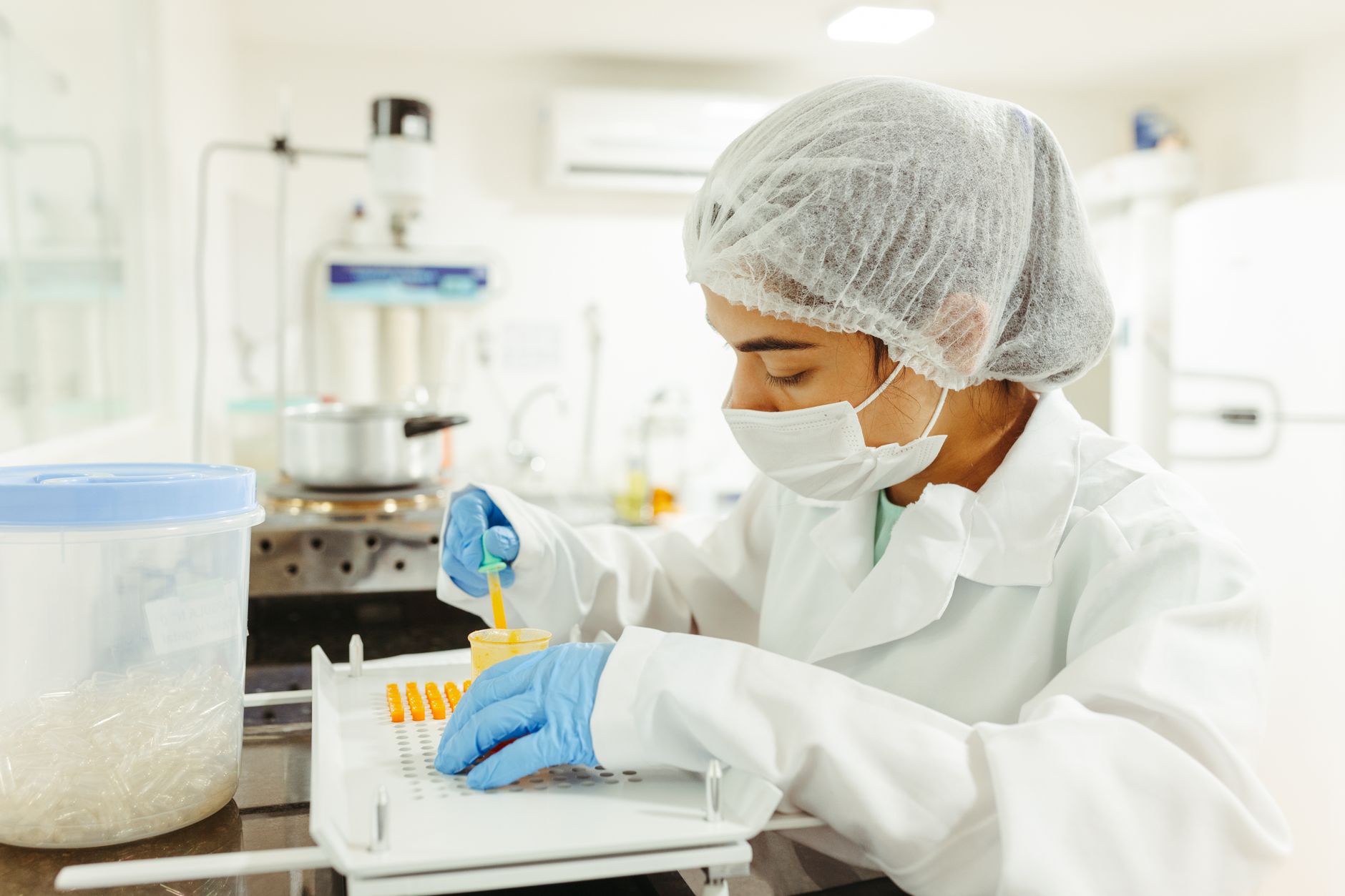
C8/C10 MCT oil (caprylic/capric triglyceride) has real, instrumented evidence behind it as a barrier-supportive emollient: a study measuring skin directly found it reduced water loss and increased hydration after application. That is a genuine, sourced finding, and it is also a different question from whether it does the same in seborrheic dermatitis specifically, because that study was done on healthy skin, not on seborrheic dermatitis patients. No published study has tested MCT oil's barrier effect in seborrheic dermatitis directly. That is a real gap in the evidence, not something to gloss over. This is a generalizability question, distinct from the ceramide-ratio question above: here the ingredient works as measured, just not yet measured in this specific population.
What MCT oil does have going for it, separate from that barrier data, is that it sits outside the fatty-acid range Malassezia uses best, unlike oleic- and palmitic-rich oils that are more likely feeding the same yeast implicated in the inflammation in the first place. That is a reasonable, honest argument for choosing it, a hydrating emollient that does not add fuel to the reaction, not a claim that it clinically repairs the seborrheic dermatitis barrier.
Where Octaskin Fits
To be precise about what Octaskin Serum does and does not do here: it contains C8/C10 MCT oil, which hydrates without feeding Malassezia, alongside 2% salicylic acid to loosen buildup and tea tree, oregano, and wild mint for antimicrobial support. It does not contain the specific ceramide, cholesterol, and fatty-acid combination that barrier-repair research says is needed to meaningfully rebuild a damaged lipid layer, and we are not going to claim it does. The formula's ingredients were chosen around the Malassezia-safe fatty-acid framework, not designed as a response to the ceramide research above; those are two separate facts, not one causal story. What it reasonably offers is a fragrance-free, steroid-free way to hydrate flare-prone skin without adding to the problem, as one part of a routine, alongside addressing the inflammation itself, not a stand-alone fix for barrier damage. See the full formula on the Octaskin Serum product page.

Frequently Asked Questions
Does a damaged skin barrier cause seborrheic dermatitis?
Not on its own. Current evidence points to a two-way relationship between barrier function and inflammation rather than a single, settled cause in either direction.
Can barrier repair replace antifungal treatment?
No. Researchers who study this describe barrier-supportive care as an addition to established antifungal and anti-inflammatory treatment, not a replacement for it.
Do ceramide products help seborrheic dermatitis?
Possibly, but this is extrapolated from general skin-barrier research, not from seborrheic dermatitis-specific studies. What is confirmed is that ceramides alone, without the right supporting fats and cholesterol, can fail to help or even work against barrier function.
Does MCT oil have research support for repairing the skin barrier in seborrheic dermatitis specifically?
Not directly. Instrumented studies show it reduces water loss and improves hydration in healthy skin, but no published study has tested it in seborrheic dermatitis patients specifically. Its use here rests on that general barrier evidence plus its fit with the Malassezia-safe fatty-acid framework, not a seborrheic-dermatitis-specific trial.
Read more

Most flares respond to a consistent home routine. Here are the specific, concrete signs that mean it is time to stop self-treating and see a dermatologist instead.

Cradle cap is common and usually clears on its own within a year. Here is the safe way to care for it, and specifically what to avoid, including ingredients found in adult seborrheic dermatitis pro...