
Seborrheic Dermatitis in Black Skin and Textured Hair
Seborrheic Dermatitis in Black Skin and Textured Hair
By the Octaskin Team. Last updated September 2026. This article is educational and is not a substitute for medical advice; the guidance below is drawn from dermatology research cited throughout.
Quick answer: Seborrheic dermatitis is genuinely common in Black patients, described in a 2025 clinical review as the second most common reason Black patients see a dermatologist at all. It can look different on darker skin than the textbook redness most content describes, and the standard "wash and treat several times a week" advice often clashes with how many people actually care for textured or curly hair. The real dermatological answer to that clash is not "wash more," it is adjusting the approach, and hair texture and styling practice vary widely from person to person, so what follows is general guidance to bring to your own dermatologist, not a single fixed routine.

How It Can Look Different
Redness is harder to see against more melanin-rich skin, which changes what a flare actually looks like. The American Academy of Dermatology describes it directly: "if you have a darker skin tone, the rash tends to look pink, slightly purple, or lighter than your natural skin tone... in lighter skin tones, the rash is usually red and raised." A 2019 clinical review describes a distinct pattern sometimes seen in skin of color called petaloid seborrheic dermatitis, arcuate or petal-shaped patches that appear pink or lighter than the surrounding skin, often with little visible scale, a presentation easy to miss if you are only looking for the classic greasy red patch.
Dark or light discoloration is also a real, separate part of the picture, not just an afterthought. The AAD notes that "early detection and treatment can prevent dark spots and patches," and this shows up in cradle cap too, where infants with darker skin tones may show discoloration and lighter patches rather than the classic yellow, greasy crust described for lighter skin.
The Real Tension Between Shampoo Protocols and Real Wash Frequency
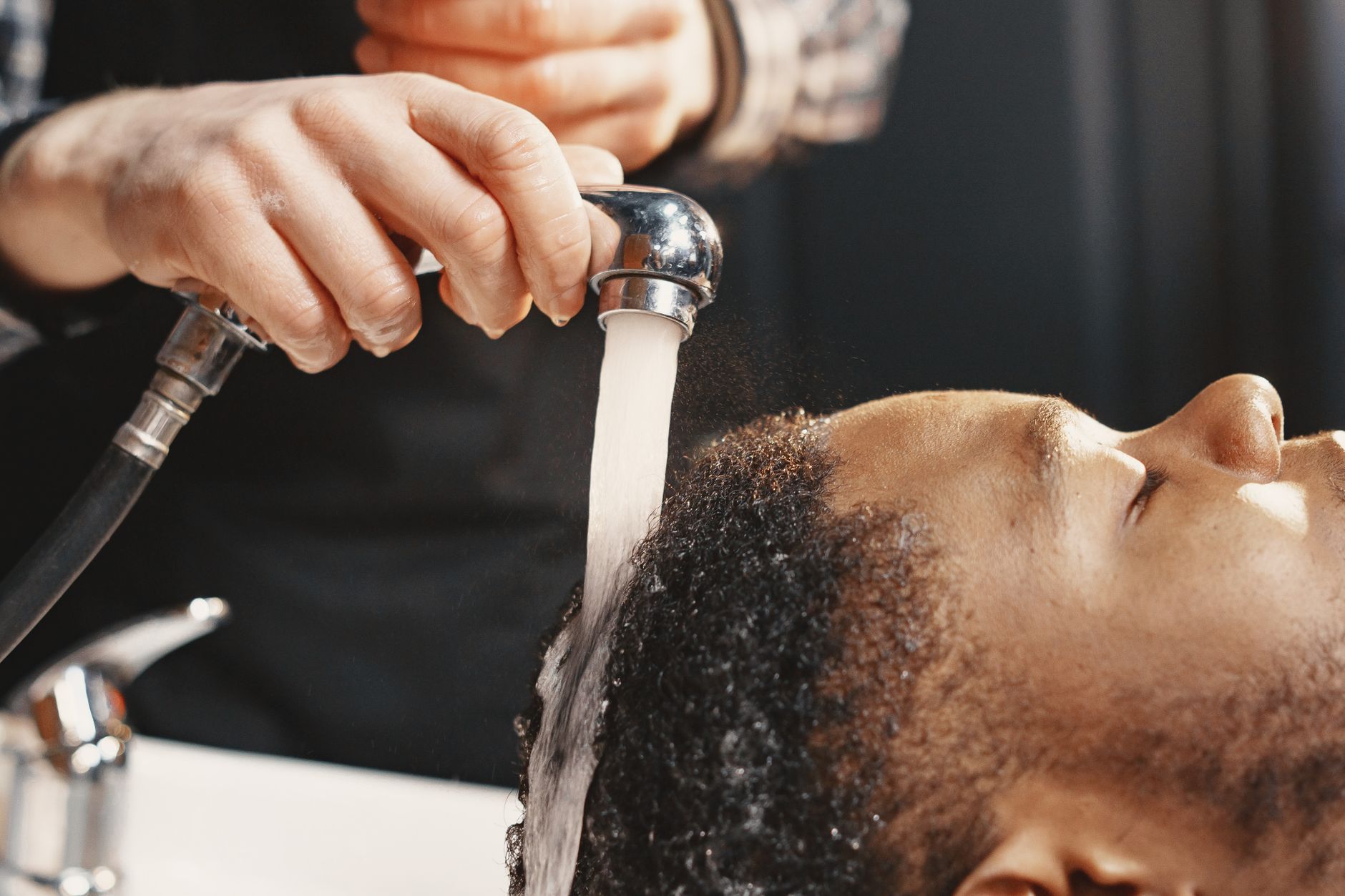
This is the part most content skips past. Standard medicated shampoo instructions assume washing two to three times a week or more. The 2025 clinical review is candid about the mismatch: "frequency of hair washing varies greatly among Black patients, sometimes occurring only once monthly... these cultural practices can undermine the effectiveness when medicated shampoos are prescribed." Per a related 2024 review, citing earlier research on hair care practices, Black women wearing natural, non-protective styles washed their hair roughly every two weeks on average, while those with braids or weaves went closer to three to four weeks between washes, patterns tied to styling choices and time, not a lack of care.
The honest, dermatologist-endorsed answer is not to push for daily washing. The 2025 review describes a practical compromise used in practice: applying a medicated treatment three to four times a week while washing the hair weekly rather than daily, adjusting the protocol to fit the person rather than the reverse. Dr. Renée Beach, a Toronto dermatologist, has been directly quoted making the same point: "I recommend scalp shampooing twice per week. This is very laborious for patients with Afro-textured hair or curlier hair textures, but it is temporary." She has also suggested mixing a medicated shampoo with a bit of conditioner to reduce the stripped feeling that often makes people give up on a treatment early, a practical adherence tip worth trying if dryness is what is derailing your routine.
Product Considerations That Actually Matter
Not every seborrheic dermatitis active behaves the same way on textured or chemically treated hair. The 2025 clinical review flags a specific caution: ketoconazole "increases the risk for hair shaft dryness, damage, and subsequent breakage, especially in Black women who also may be using heat styling or chemical relaxers," recommending it be applied directly to the scalp rather than worked through the hair shafts, with ciclopirox olamine and zinc pyrithione noted as lower-risk alternatives for people concerned about this. The same review, citing separate research on product preference, notes that "Black patients preferred using ointment or oil vehicles" over the foams and sprays that dominate a lot of mainstream seborrheic dermatitis marketing.
Tightly coiled hair also changes how oil behaves on the scalp. The review explains that tight curls "impede sebum from traveling down the hair shaft, leading to oil buildup on the scalp," an environment Malassezia can take advantage of, which is why the guidance given is to apply grooming and moisturizing oils to the length of the hair rather than working them into the scalp itself. That guidance is specifically about the heavier oils used for daily moisture and styling, not the same thing as a thin, targeted treatment meant to be absorbed rather than sit on the surface, but it is a genuinely useful distinction to keep in mind when building a routine: heavy sealing oils belong on the hair, a scalp-targeted treatment is a different category of product applied a different way.
The Good News About Discoloration
If dark or light patches from a flare are part of what you are dealing with, it is worth knowing this is not necessarily permanent. The 2025 review cites a study where twice-daily use of pimecrolimus, a prescription anti-inflammatory, "rapidly normalized skin pigmentation during the first 2 weeks of use." The AAD reports similar results for a newer prescription foam: "within 8 weeks, 64.7% of the patients who had dark spots saw their hyperpigmentation disappear." Treating the underlying inflammation, not just waiting, is what actually resolves the discoloration in these studies. Worth a fair note too: that same newer treatment's approval trial included only 36 Black patients out of 457 total, a real gap in how well-represented these results are for the population most likely to deal with this specific symptom, and a reasonable thing to ask your dermatologist about directly.
Where Octaskin Fits
Octaskin Serum is a leave-on, oil-based formula rather than a foam or spray, a format that research on patient preference suggests fits more comfortably into many Black patients' routines than the foams and sprays common elsewhere. To be precise about what that means here: it is a thin, targeted application containing 2% salicylic acid to loosen scale, alongside C8/C10 MCT oil and botanical extracts, meant to be applied directly and absorbed, not a heavy sealing oil worked through the length of your hair. We are not claiming the MCT oil or botanicals have antifungal effects on their own; the salicylic acid is the active doing the keratolytic work here. As with any seborrheic dermatitis routine, adjust frequency to what is realistic for your hair care schedule rather than forcing a daily routine that does not fit, and pair it with an antifungal wash on the schedule that works for you. See the full formula on the Octaskin Serum product page.
Frequently Asked Questions
Does seborrheic dermatitis look different on Black skin?
Often, yes. Redness is harder to see against more melanin-rich skin, so flares can appear pink, purple, or lighter than the surrounding skin rather than classic red, sometimes with a distinct petal-shaped pattern and little visible scale. Dark or light discoloration is also a common, separate feature.
Why do dermatologists sometimes recommend washing less, not more, for textured hair?
Because standard shampoo protocols were built around a wash frequency that does not match how many people with textured or protective-styled hair actually wash. Dermatologists who specialize in this describe adjusting the treatment schedule, medicating a few times a week while washing weekly, for example, rather than insisting on a routine that is not realistic to maintain.
Is ketoconazole shampoo safe for textured or relaxed hair?
It can increase the risk of dryness and breakage, especially alongside heat styling or chemical relaxers, so dermatologists sometimes suggest applying it directly to the scalp rather than through the hair shafts, or using ciclopirox or zinc pyrithione instead if breakage is a concern.
Will dark or light spots from seborrheic dermatitis go away?
Often, yes, especially with treatment aimed at the underlying inflammation rather than waiting it out. Studies on prescription anti-inflammatory treatments have shown pigmentation normalizing within weeks of consistent use.
Can hair oils make seborrheic dermatitis worse on curly or coily hair?
Heavy oils used generously on tightly curled hair can build up on the scalp rather than traveling down the hair shaft the way they would on straighter hair, creating conditions Malassezia can take advantage of. The common guidance is to apply moisturizing oils to the length of the hair rather than working them into the scalp itself.