Castor Oil for Seborrheic Dermatitis: What the Research Actually Shows
Castor Oil for Seborrheic Dermatitis: What the Research Actually Shows
Quick answer: No good evidence shows that castor oil treats seborrheic dermatitis, and no good evidence shows that it reliably makes it worse. Some sites call castor oil for seborrheic dermatitis a natural antifungal, while others say it feeds the yeast. Both claims rest on a handful of lab results, not on studies of people's skin. What we do know: castor oil is an unusual oil, one Malassezia species can grow on it in a dish, the main scalp species did not grow on a castor oil derivative, and it is thick, sticky and hard to wash out. Oils with clearer evidence exist, so there is little reason to make castor oil your first pick.
| Claim you will see online | What the evidence shows |
|---|---|
| "Castor oil is antifungal and treats seb derm" | We found no peer-reviewed study showing castor oil kills or slows Malassezia, and no clinical trial testing it on seborrheic dermatitis or dandruff. |
| "Castor oil feeds the yeast" | Partly, in the lab. M. furfur can grow on castor oil and on a castor oil derivative. The species most linked to scalp flaking did not grow on that derivative, and we found no published data on how they handle plain castor oil. |
| "Castor oil grows hair" | A systematic review found only weak evidence for hair luster and no strong evidence for growth. |

What castor oil is, and why it behaves differently from other oils
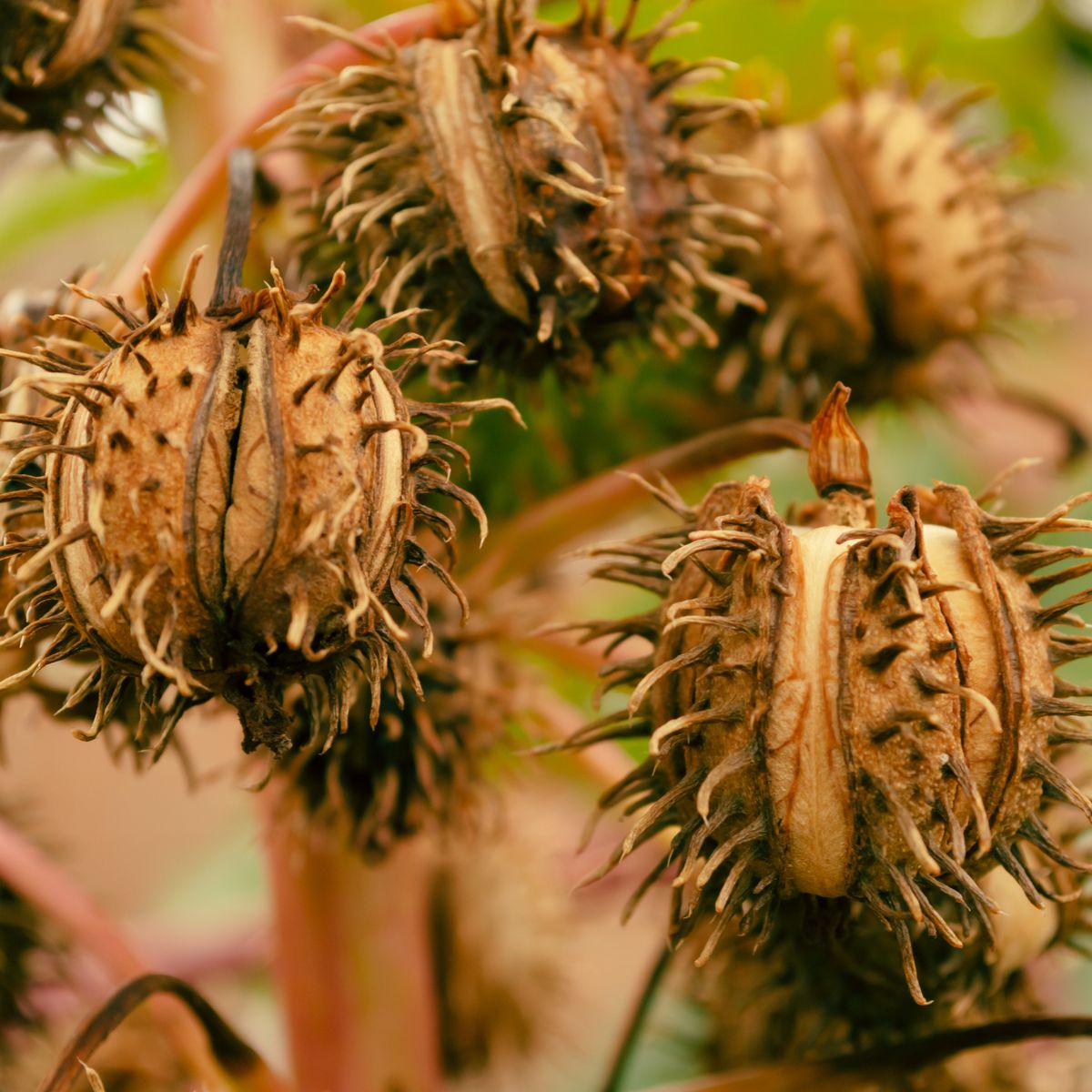
Most plant oils are built mainly from palmitic, oleic and linoleic acids. Castor oil is not. Its dominant fatty acid is ricinoleic acid, which typically makes up somewhere around 75 to 90 percent of the oil; a review of castor oil composition in Food Science and Technology reports that the profile "constitutes mainly of ricinoleic acid," with the exact share varying by where the beans were grown. Ricinoleic acid is an 18-carbon monounsaturated fatty acid, like oleic acid, but with an extra hydroxyl (OH) group partway along the chain. That hydroxyl group is widely credited with castor oil's unusual thickness, and it is also why you cannot simply slot castor oil into the usual "oils that feed the yeast" rules.
Those rules come from how Malassezia eats. The yeast lacks the gene for making its own fatty acids and depends on lipids from the skin, so it breaks down skin oils to get them. A 2025 FEMS Yeast Research study that grew Malassezia on single fatty acids found the yeast grew most efficiently on palmitic acid (C16:0), with comparable growth on oleic acid (C18:1). That is part of why oleic-rich oils such as olive and argan draw caution in our guide to oils for seborrheic dermatitis. But that study did not test ricinoleic acid, so it cannot tell us where castor oil lands.
Want an oil base chosen for Malassezia-prone skin? Octaskin Serum pairs C8/C10 MCT with 2% salicylic acid for scalp, face and beard.
See the serum →Does castor oil feed Malassezia?
This is the question with the most real data behind it, and the answer depends on which Malassezia species you mean.
The evidence that it can. In a 1997 lab study published in the British Journal of Dermatology, researchers tested how seven Malassezia species handled ten emulsifiers. Several were used by every species, but Cremophor EL, a processed castor oil derivative, was used only by M. furfur, which the authors linked to a different metabolism of castor oil and its main component, ricinoleic acid. The paper's title describes castor oil and ricinoleic acid themselves as selective for M. furfur; we could only read the abstract, not the full data. Separately, a 2023 letter in Skin Appendage Disorders described an experiment in which M. furfur grew on butter, corn oil, olive oil, coconut oil, oleic acid and castor oil, with castor oil last on that list. So at least one species can grow on castor oil, even if it ranks below the usual suspects.
The evidence that the main scalp yeasts may not. M. globosa and M. restricta are the species most often linked to scalp seborrheic dermatitis and dandruff; a review of seborrheic dermatitis and dandruff notes that higher numbers of both correlate with how severe it looks. When a 2007 study in the Journal of Clinical Microbiology grew fresh clinical isolates on Cremophor EL, none of the M. globosa, M. restricta or M. sympodialis isolates grew, while most M. furfur and M. pachydermatis isolates did.
What that does and does not prove. Cremophor EL is not the castor oil in your cupboard; it is a chemically modified emulsifier. The 1997 paper hints that plain castor oil and ricinoleic acid behave the same way, but we could not see its full results, and we found no other published data on how M. globosa or M. restricta handle plain castor oil. The fair reading is this: castor oil looks like a poorer food source than palmitic- and oleic-rich oils, at least one species can use it, and nothing has tested what it does on a real scalp. That is "probably not a strong food source," not "safe."
Is castor oil antifungal?
Not on current evidence. Many articles describe castor oil or ricinoleic acid as antifungal, and some point to unnamed recent "trials." We could not find a peer-reviewed study showing that castor oil inhibits Malassezia, and the lab work above shows the opposite for M. furfur, which can grow on it. We also found no clinical trial of castor oil for seborrheic dermatitis or dandruff. When a page says castor oil "fights fungus" without a citation, that is usually the claim being repeated from page to page, not a result.
This matters because the treatments that do have evidence work differently. The American Academy of Dermatology's seborrheic dermatitis treatment guidance describes ketoconazole as a medication that is often prescribed and that can diminish the rash, itch and scale. An oil, any oil, is a supporting step next to that, not a substitute for it.

Castor oil for dandruff, scalp, beard and brows
Dandruff and the scalp. Dandruff and scalp seborrheic dermatitis sit on the same spectrum and involve the same yeast, as reviews of the two conditions describe (we explain the overlap in seborrheic dermatitis vs dandruff), so the evidence picture above applies to both. Castor oil is usually suggested for the scalp because of hair growth claims, but a 2022 systematic review of coconut, castor and argan oil for hair found only weak evidence that castor oil improves hair luster and no strong evidence for hair growth. Jamaican black castor oil is a traditionally processed version made from roasted beans. We found no independent analysis of how its makeup differs from regular castor oil, and none of its scalp claims have been tested either.
Washing it out. Castor oil is very viscous, which makes it hard to rinse from hair and easy to overapply. In rare cases this goes badly: a case report in the International Journal of Trichology described acute hair felting, a sudden, irreversible matting of long hair, after coconut and castor oil were applied following a hair wash; the authors note the only fix is cutting the hair off. It is uncommon, but it is the kind of risk the "just leave it on overnight" advice never mentions. A heavy, occlusive layer on an already oily, flaky scalp is also the opposite of what most seb derm routines aim for.
Beard and eyebrows. The same logic carries over. In a beard, castor oil is often blended into beard oils for its thickness; if your beard area flakes, that heaviness traps scale rather than lifting it, and our guide to beard oil for seborrheic dermatitis covers lighter bases. On the eyebrows, castor oil is popular as a brow "growth serum," but it sits close to the eyes, where a thick oil can migrate, and it has the same unknowns. For brow flaking, see our eyebrow seborrheic dermatitis guide.
Allergy and irritation. Castor oil is generally well tolerated, but a 2026 narrative review of castor oil in dermatology notes that rare cases of contact dermatitis and hair felting have been reported. On inflamed skin, any new product deserves a patch test.
Better options for seb-derm-prone skin
If your goal is to calm flaking, the order of operations matters more than the oil. Start with an antifungal step, such as a ketoconazole shampoo or another medicated wash your doctor or pharmacist suggests, then add hydration that does not hand the yeast an easy meal. The two emollients with the clearest rationale are:
- MCT oil (caprylic/capric triglyceride). Its short C8 and C10 chains sit below the C12-and-longer fatty acids tested in the lab growth studies above. Our guide to MCT oil for seborrheic dermatitis explains C8 vs C10 and how to read the label.
- Squalane. A light, saturated hydrocarbon rather than a source of fatty acids. See is squalane good for seborrheic dermatitis.
Both are also far lighter than castor oil, which makes them easier to use on the scalp, in a beard, or near the brows. If you are comparing other popular oils, we have looked at jojoba, argan and coconut oil the same way.
Where Octaskin Serum fits. In the interest of disclosure: we make a serum built on this logic, so we are not neutral on MCT oil. Octaskin Serum uses a C8/C10 MCT base with 2% salicylic acid to loosen scale, plus tea tree, oregano and wild mint oils, and it is fragrance-free and steroid-free. It is designed to manage flaking, redness and itch with consistent use alongside your antifungal step, not to replace it.
If you still want to try castor oil
Some people tolerate castor oil well, and the evidence does not rule it out. If you want to test it on yourself, keep the experiment fair:
- Patch test first on a small area of unaffected skin for a few days.
- Use very little, ideally diluted in a lighter oil such as MCT, and avoid leaving a thick layer on the scalp overnight if your hair is long.
- Change one thing at a time, and keep your antifungal routine the same so you can tell what is doing what.
- Stop if flaking, itch or redness increases over the next two weeks. That is your answer, whatever any article says.

Octaskin Serum
★ 4.6 from 97 reviews · results vary
2% salicylic acid in a Malassezia-safe C8/C10 MCT base. Fragrance-free and steroid-free, for scalp, face, beard and brows.
$49.99 · Free shipping, no minimum · Subscribe & save 15%
Shop the serumFrequently asked questions
Is castor oil good for seborrheic dermatitis?
No good evidence shows that castor oil treats seborrheic dermatitis, and no good evidence shows that it reliably worsens it. We found no clinical trial testing it for the condition. Lighter, better-understood options such as MCT oil or squalane, used alongside an antifungal, are a more sensible first choice.
Does castor oil feed Malassezia?
Partly, in the lab. M. furfur can grow on castor oil and on a castor oil derivative called Cremophor EL. The species most linked to scalp flaking, M. globosa and M. restricta, did not grow on Cremophor EL. Castor oil looks like a weak food source for them, but it has never been tested on a real scalp.
Is castor oil antifungal?
We found no peer-reviewed evidence that castor oil kills or slows Malassezia. Lab work shows at least one Malassezia species can actually grow on it. Claims that castor oil is a natural antifungal are widely repeated online but are not backed by published studies on this yeast.
Can castor oil make dandruff worse?
It might for some people, though it has not been studied directly. Castor oil is thick and occlusive, can be hard to wash out, and at least one Malassezia species can grow on it in the lab. If flaking or itch increases after you start using it, stop and go back to your usual routine.
Is castor oil safe for seborrheic dermatitis on the eyebrows or beard?
It is rarely harmful, but it is not an ideal choice. Its thickness can trap scale in a beard, and near the brows it can migrate toward the eyes. A lighter Malassezia-safe option such as MCT oil or squalane is easier to use in both areas. Patch test anything new first.
Can I use castor oil for cradle cap?
We found no published clinical trials of castor oil for cradle cap. Baby skin is more sensitive, so check with your pediatrician before using any oil, and see our cradle cap guide for gentle, evidence-based care.
Related reading: Understanding Seborrheic Dermatitis · The Malassezia-Safe Framework: What the Science Shows · Seborrheic Dermatitis in Black Skin and Textured Hair · Cradle Cap: Causes, Safe Care, and What to Avoid