
Does Argan Oil Feed Malassezia? Argan Oil and Seborrheic Dermatitis
Does Argan Oil Feed Malassezia? Argan Oil and Seborrheic Dermatitis
By the Octaskin Team. Last updated June 2026. This article is educational and is not a substitute for medical advice; the guidance below is drawn from the dermatology and laboratory sources cited throughout.
Short answer: argan oil most likely can feed Malassezia, the yeast behind seborrheic dermatitis, so it is a poor choice for Malassezia-prone skin. Argan is rich in oleic and palmitic acid, which sit in the fatty-acid range the yeast feeds on best. That does not make argan harmful for everyone, and some people tolerate it, but if your skin flares it is a sensible oil to skip in favor of better-understood options like MCT or squalane. Here is what the science actually says, and why the answer is a careful "probably not" rather than a flat ban.
Why oil choice matters for seborrheic dermatitis
Seborrheic dermatitis is not simple dryness. It is an inflammatory reaction to Malassezia, a yeast that lives normally on oily skin but that some people react to. As the American Academy of Dermatology explains in its seborrheic dermatitis overview, the rash tends to settle where oil glands cluster, such as the scalp, the sides of the nose, the eyebrows, the beard area, and the mid-chest. As DermNet's dermatology reference on seborrhoeic dermatitis notes, it is a long-term, relapsing condition that is managed rather than permanently resolved: no product clears it for good, but the right routine keeps the flaking, redness, and itch under control.
The detail that makes oils a live question is how this yeast eats. Malassezia cannot make its own fatty acids, so it has to scavenge them from sebum and from anything you put on your skin, as described in the dermatology reference StatPearls on seborrheic dermatitis. It releases enzymes called lipases that split oils into free fatty acids, and on susceptible skin those free fatty acids are part of what drives the irritation. So when you apply an oil, the real question is not whether it feels nice. It is whether the yeast can use it as food.
What argan oil is made of
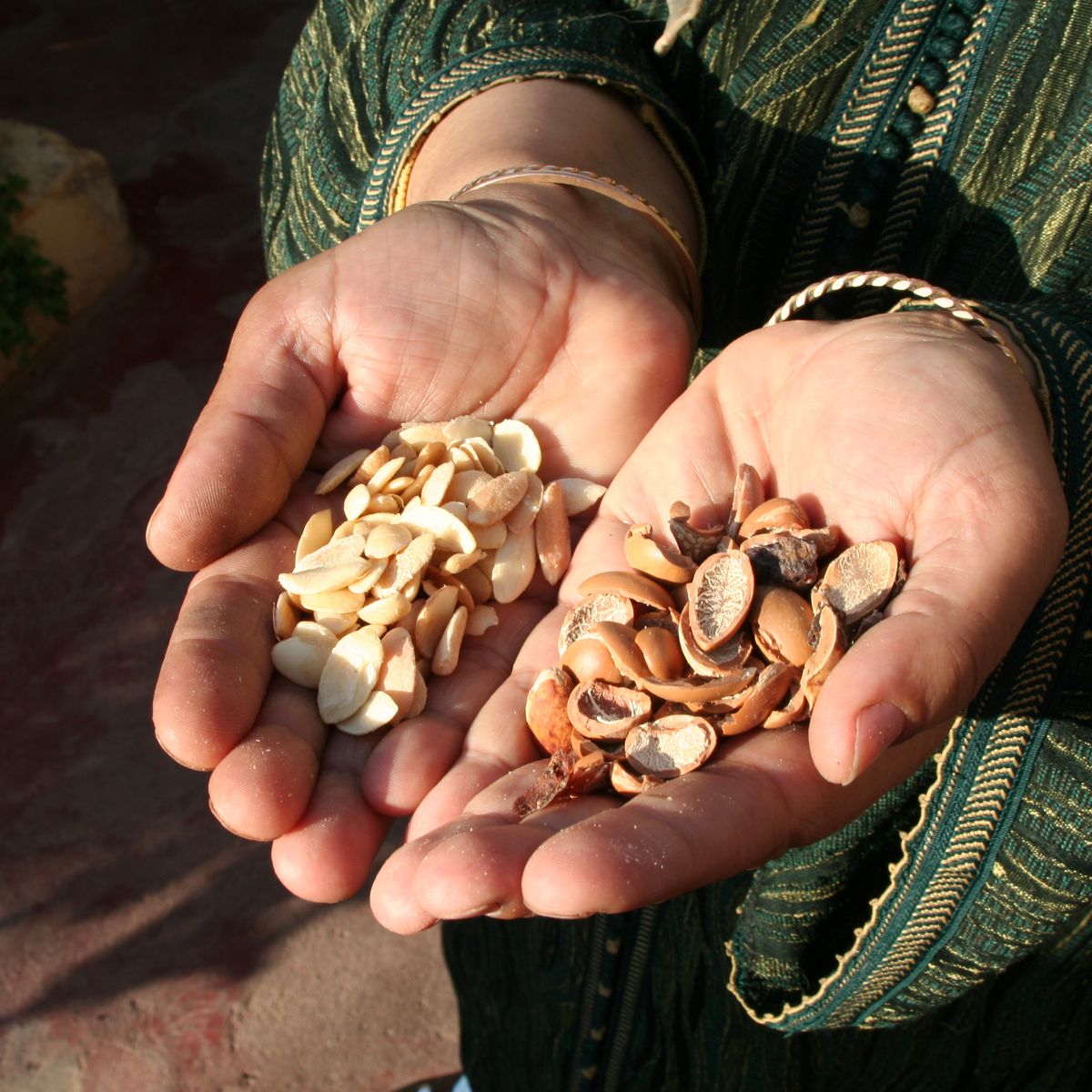
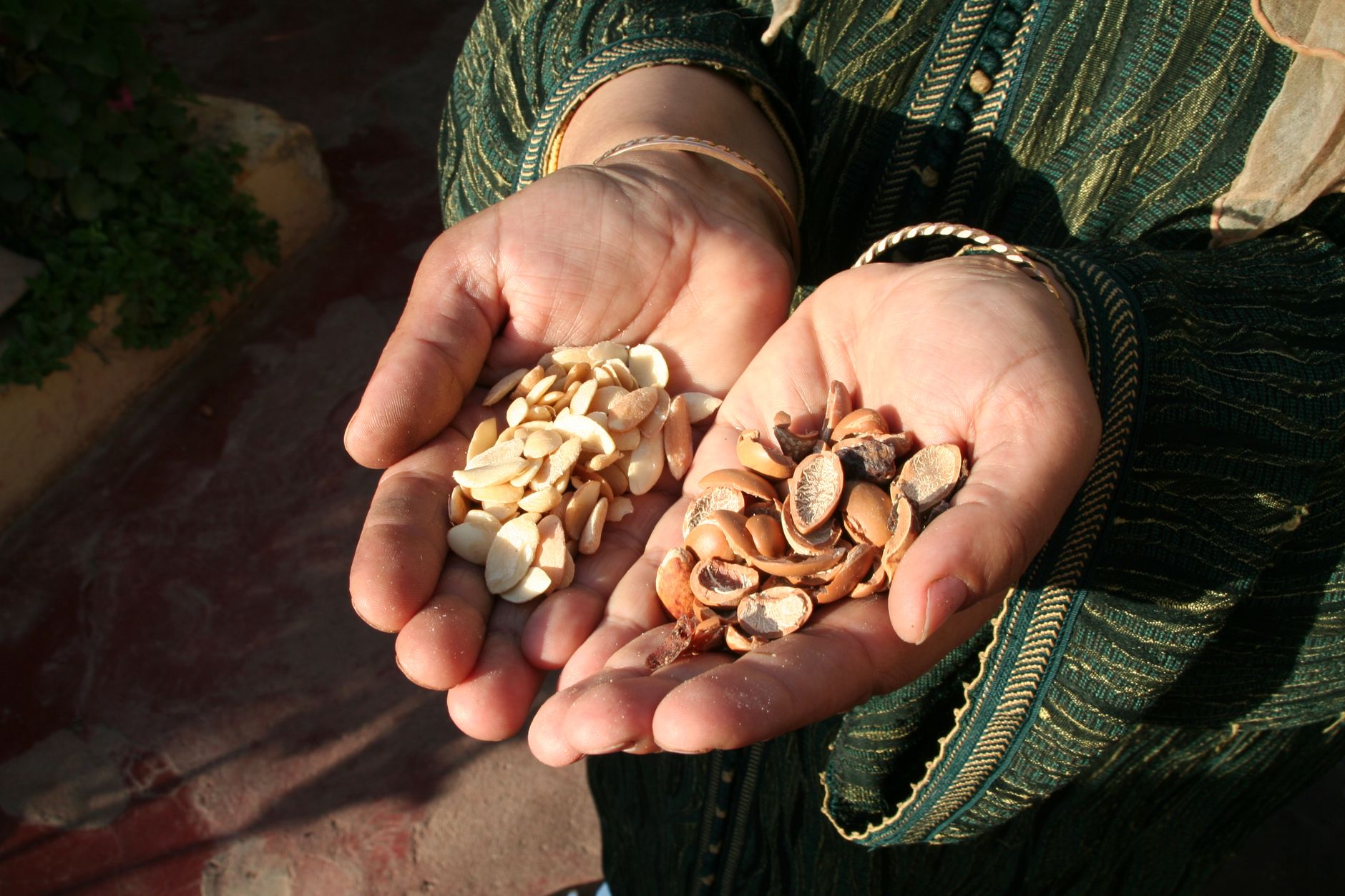
Argan oil is a plant oil pressed from the kernels of the Moroccan argan tree, and it is genuinely good for ordinary skin. The catch for seborrheic dermatitis is its fatty-acid profile. According to a peer-reviewed analysis of cosmetic argan oil composition, oleic acid (C18:1) makes up roughly 47% of argan oil and palmitic acid (C16:0) another 13%, with linoleic acid (C18:2) making up most of the rest. In other words, argan is dominated by exactly the chain lengths that are most relevant here.
That is the heart of the issue. Oleic acid in particular is the fatty acid most often linked to the irritation in seborrheic dermatitis, and an oil that is nearly half oleic acid is delivering a lot of it. A pleasant texture and a reputation as a "good for skin" oil do not change the chemistry.

Does argan oil feed Malassezia? What the science shows
The popular shorthand online is that Malassezia feeds on fatty acids from about C11 to C24, so anything in that range is risky. That heuristic is useful but too broad. A 2025 study in FEMS Yeast Research that tested Malassezia growth on single fatty acids found the yeast grows best on palmitic acid (C16:0) and that oleic acid (C18:1) drives growth as its concentration rises, while several longer fatty acids did not support growth at all. The best-documented feeding window is roughly C16 to C18. The very long end, around C20 and above, is where the evidence gets thin.
Put argan oil against that picture and the answer is uncomfortable for argan. Its two largest components, oleic acid and palmitic acid, are the two fatty acids that study singled out as the best food for the yeast. That is a much stronger case than the vague "it is in the range" argument. So the honest verdict is that argan oil most likely can feed Malassezia, and it is a poor pick for skin that flares.
It is worth being precise about the limits of this, because that honesty is the point. The growth studies are done in the lab, not on living skin, and your skin is not a petri dish. Real factors like how much you apply, your own skin chemistry, and how reactive your immune system is all shift the result. So the right framing is a strong heuristic rather than a physical law: argan supplies a lot of the fatty acids the yeast prefers, which makes it a smart oil to avoid if you are prone to flares, not a poison that will harm every person who touches it.
Is argan oil good for seborrheic dermatitis in any way?
Argan does have real properties, so it is fair to ask whether any of them help here. It is rich in vitamin E and antioxidants, and it is a perfectly good moisturizer for skin that is not Malassezia-prone. Some people reach for it hoping the antioxidants will calm inflammation. The problem is that none of those qualities address the actual driver of seborrheic dermatitis. There is no good clinical evidence that argan oil treats the condition, and the one quality that does matter, its fatty-acid content, points the wrong way. A soothing antioxidant oil that also feeds the yeast is working against itself.
This is the same trap that catches a lot of "natural" oils. An oil can be excellent for general skin care and still be a poor fit for seborrheic dermatitis, because the question that decides it is narrow and specific. For the wider picture of which oils help and which to skip, see our pillar guide to oils for seborrheic dermatitis, and for a closely related gray-area case, our piece on jojoba oil for seborrheic dermatitis, which lands on a more uncertain verdict than argan does.
Safer, better-understood oils to use instead
If you want the comfort of an oil without the question mark, two options are both well understood and considered Malassezia-safe.
| Oil | Main fatty acids | Malassezia verdict |
|---|---|---|
| Argan | Oleic (C18:1) and palmitic (C16:0), the best-documented feeders | Risky; a poor choice for Malassezia-prone skin |
| MCT (C8/C10) | Caprylic (C8) and capric (C10), below the feeding range | Considered safe; the yeast cannot use them |
| Squalane | A saturated hydrocarbon, not a fatty acid the yeast can metabolize | Considered safe |
MCT oil, the purified C8/C10 kind without lauric acid, sits below the chain lengths the yeast feeds on, so it hydrates without giving the yeast anything to use. Squalane is a stable hydrocarbon the yeast cannot metabolize. Both feel light, neither is a known trigger, and both are easy to find. For most people with seborrheic dermatitis, swapping argan for one of these removes a variable rather than adding one.

Argan oil is a good oil in the wrong context. Its high oleic and palmitic content lines up with the fatty acids Malassezia uses best, so for seborrheic dermatitis it is a sensible oil to avoid rather than a treatment to try. The caveat is real, and worth keeping: tolerance is individual, and a minority of people do fine with it. But if your skin flares, the low-risk move is to reach for an oil the yeast cannot eat. For the foundations of why this condition behaves the way it does, our guide to understanding seborrheic dermatitis walks through the mechanism in full.
How Octaskin Serum fits in
This is exactly the thinking behind the Octaskin Serum. Instead of an oleic-rich plant oil like argan, it uses C8/C10 MCT as its emollient, the same Malassezia-safe medium-chain oil discussed above, so it can hydrate without feeding the yeast. Paired with that is 2% salicylic acid, a well-established ingredient that loosens and clears the flaky buildup that seborrheic dermatitis leaves behind. It is fragrance-free, dye-free, and non-comedogenic. It also carries tea tree, oregano, and wild mint oils, botanicals valued for antimicrobial support.
To be straight about what it does: it helps manage flaking, redness, and itch with consistent use, and it does not remove the condition, because seborrheic dermatitis is chronic and relapsing. It works best as the "target and hydrate" step in a routine, and during an active flare it pairs well with a medicated antifungal wash rather than replacing one. The honest pitch is simply that it is built around the fatty-acid science on this page instead of against it.
Frequently asked questions
Does argan oil feed Malassezia?
Most likely yes. Argan oil is about 47% oleic acid and 13% palmitic acid, and these are the two fatty acids that lab studies single out as the best food for Malassezia. It is not proven on living skin, but the chemistry makes argan a poor choice for Malassezia-prone skin.
Is argan oil good for seborrheic dermatitis?
Generally no. Argan is a fine moisturizer for skin that is not prone to seborrheic dermatitis, but there is no good evidence it treats the condition, and its fatty-acid profile is one the yeast can feed on. Most people are better served by a Malassezia-safe oil.
Can I use argan oil on my scalp if I have seborrheic dermatitis?
It is best avoided. The scalp is one of the oiliest, most Malassezia-active areas, so an oleic-rich oil like argan is more likely to feed a flare there. A medicated antifungal shampoo plus a Malassezia-safe moisturizer is a safer combination.
What oils are safe for seborrheic dermatitis?
MCT oil (the purified C8/C10 kind) and squalane are the best-understood safe options, because the yeast cannot use them as food. They hydrate without fueling a flare.
Why do some people say argan oil helped their skin?
Tolerance is individual, and argan is a genuinely soothing oil for many skin types. Personal reports are anecdote, not evidence, and they do not change the laboratory picture. If your seborrheic dermatitis is reactive, the safe assumption is that an oleic-rich oil is a risk.
Related reading: Understanding Seborrheic Dermatitis · Does Apple Cider Vinegar Help Seborrheic Dermatitis? · Is Squalane Good and Safe for Seborrheic Dermatitis? · Is Coconut Oil Bad for Seborrheic Dermatitis? An Honest Look at the Lauric Acid Question
Read more
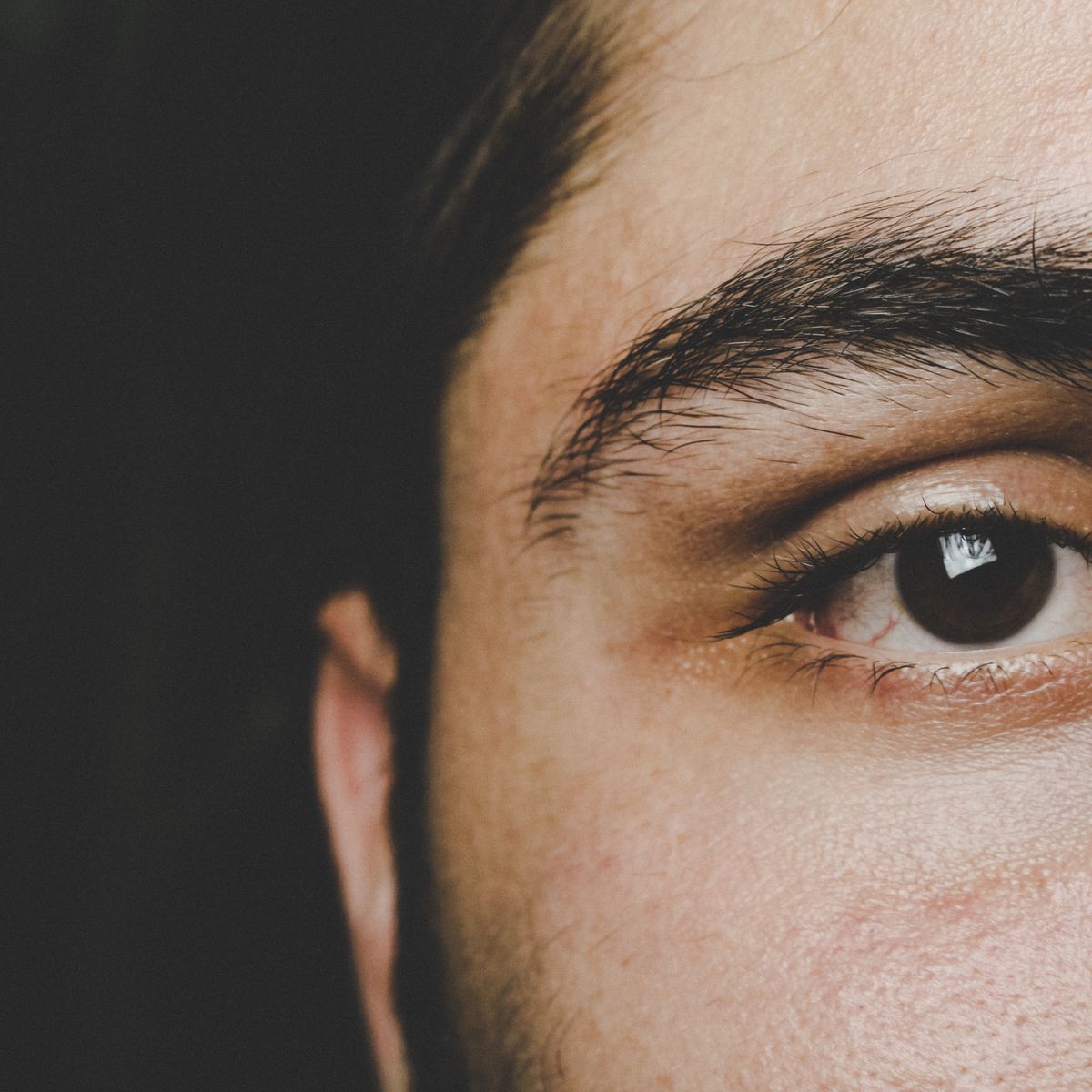
Flaky, red eyebrows from seborrheic dermatitis? How to treat it safely near the eyes, what to avoid, and a simple brow routine that keeps the flakes away.

Seborrheic dermatitis in ears causes flaky, itchy skin behind and around them. Learn the Malassezia cause, how to tell it from an infection, and how to treat it.